
ESE & Conventional Lightning Arrester Installation
When thunder and lightning strike, our systems capture the strike and pass it safely to earth — protecting your building, equipment and the people inside.
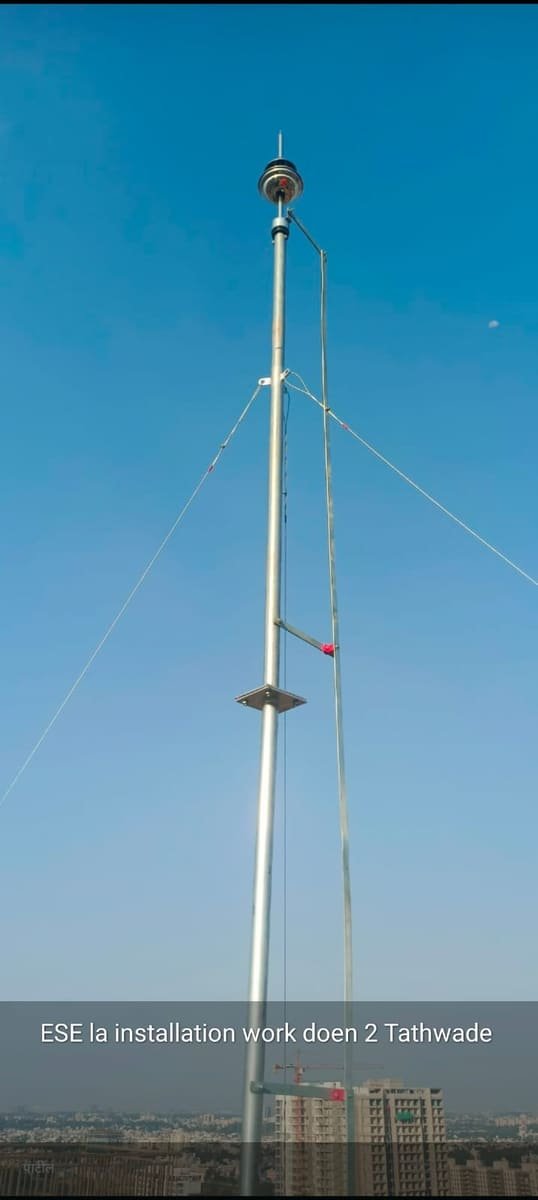 Designed per NFC 17-102 & IS/IEC 62305
What Is a Lightning Protection System?
A lightning strike carries tens of thousands of amperes. Without protection, it can crack concrete, start fires, destroy electrical equipment and endanger lives. A lightning protection system (LPS) gives that current a controlled path to the ground.
India sees some of the highest lightning activity in the world during pre-monsoon and monsoon months. Tall buildings, industrial sheds, solar plants and open installations are especially exposed.
- Prevents structural damage & fire
- Protects people inside the building
- Reduces equipment and data loss
- Required by building codes & insurers
Capture · Conduct · Dissipate
Each component plays a vital role in safely handling a lightning strike.
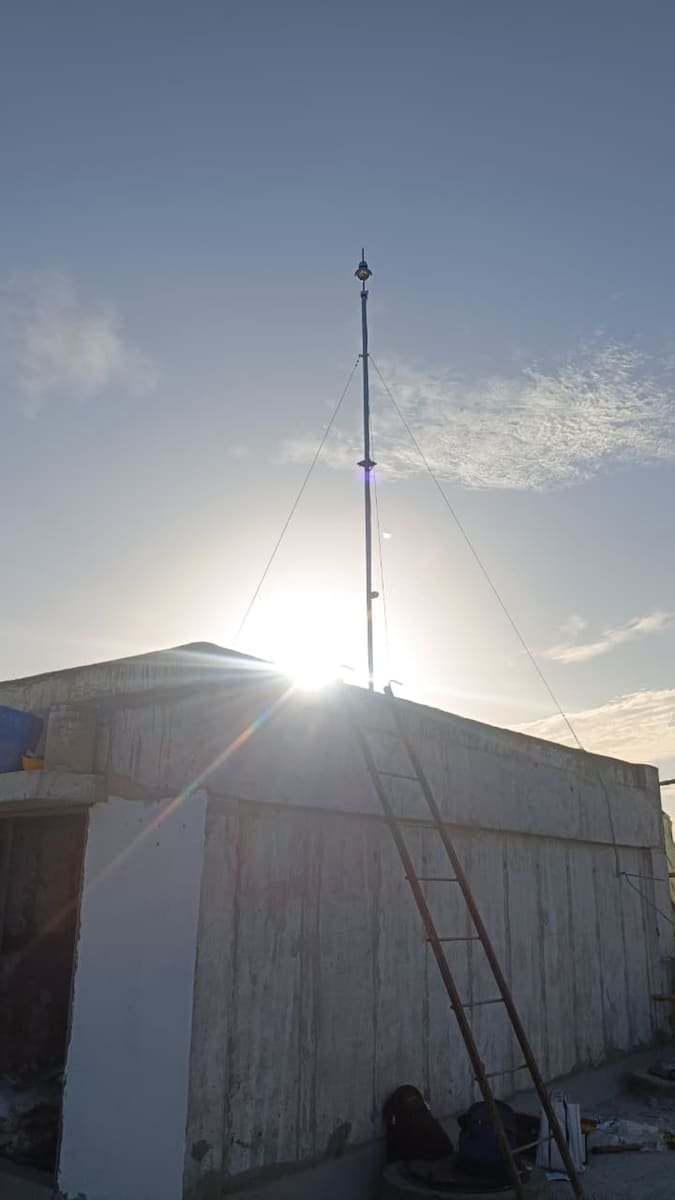
Air Terminal
ESE head or Franklin rod mounted at the highest point to intercept the strike.
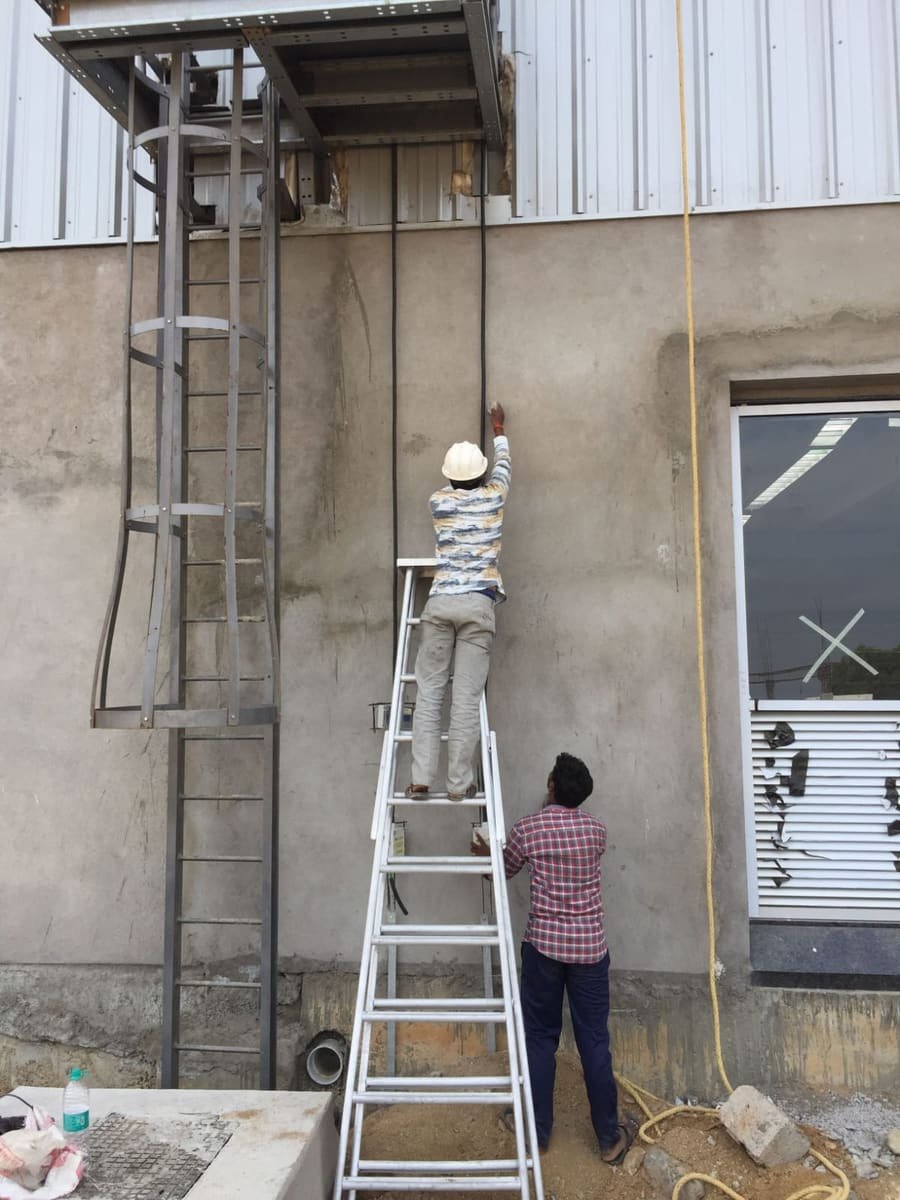
Down Conductor
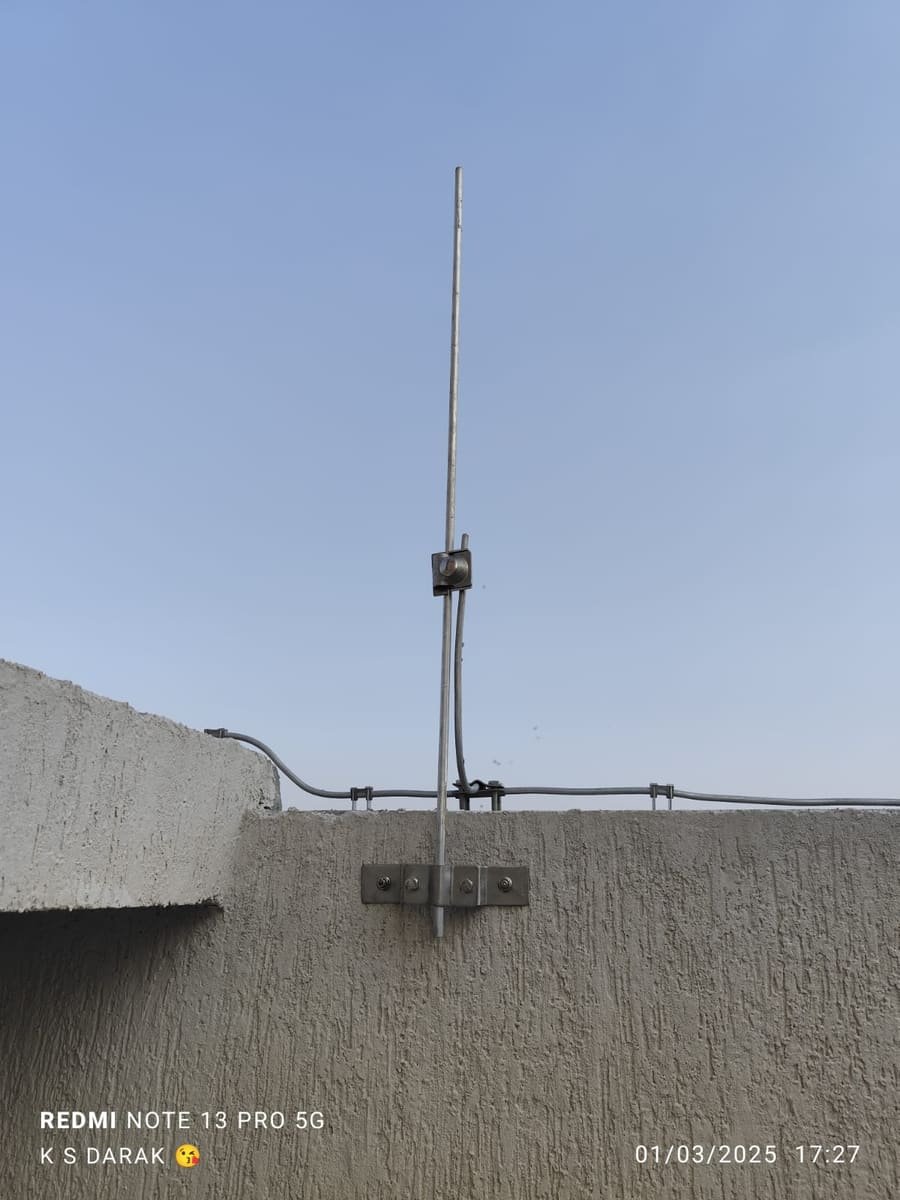
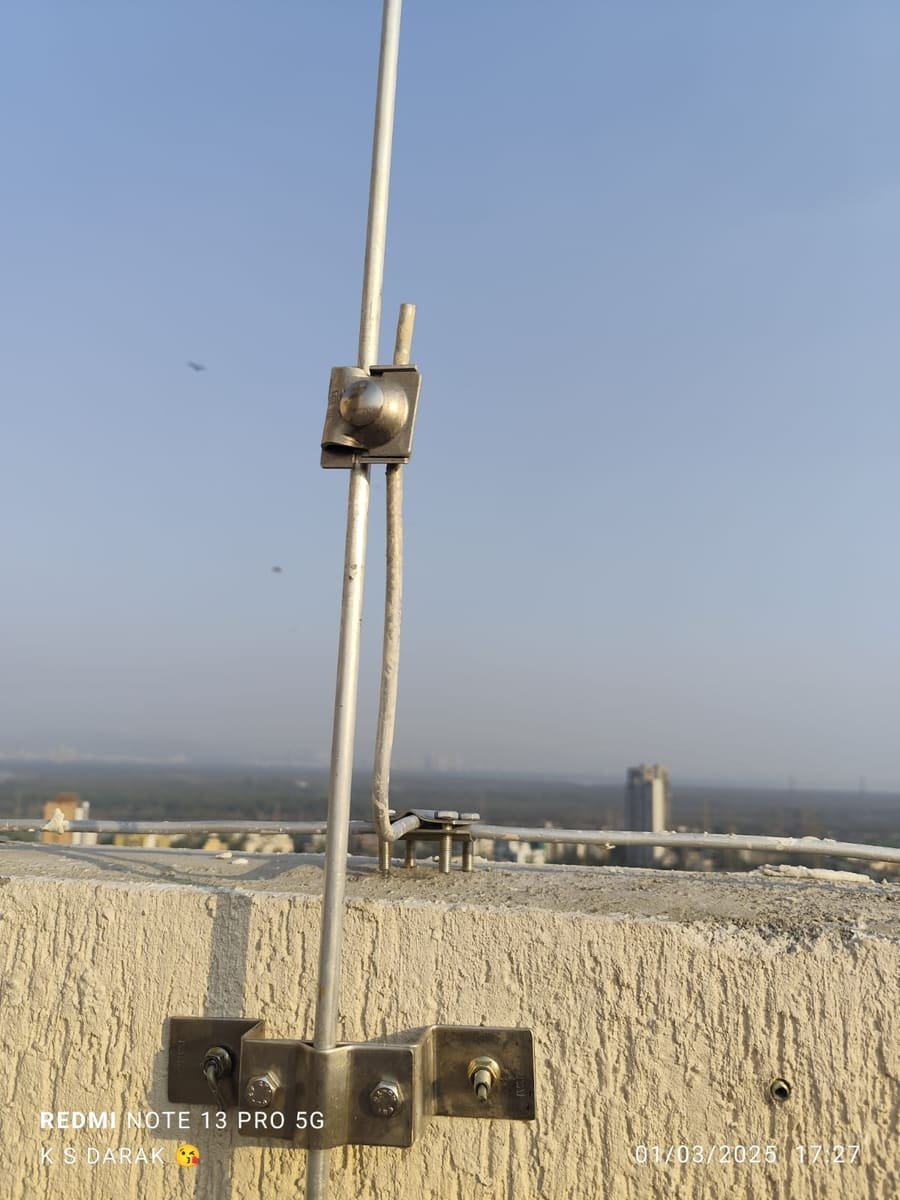
Copper or GI conductor routed along the façade with insulated holders.
Test Joint & Counter
For inspection, testing and recording the number of strikes.
Earth Termination
Maintenance-free earth pits that dissipate the current into the soil.
What We Install
Quality components, correctly installed — the difference between protection and a false sense of safety.
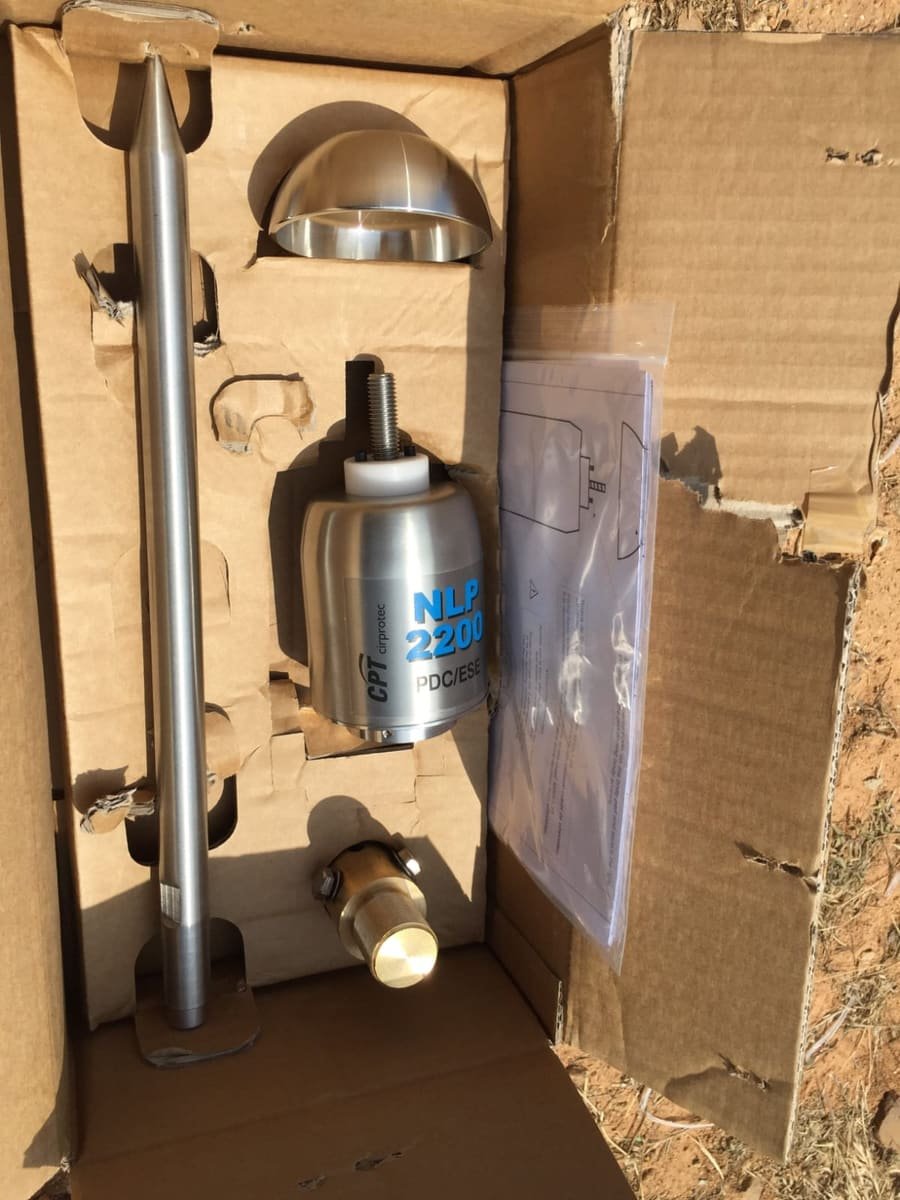
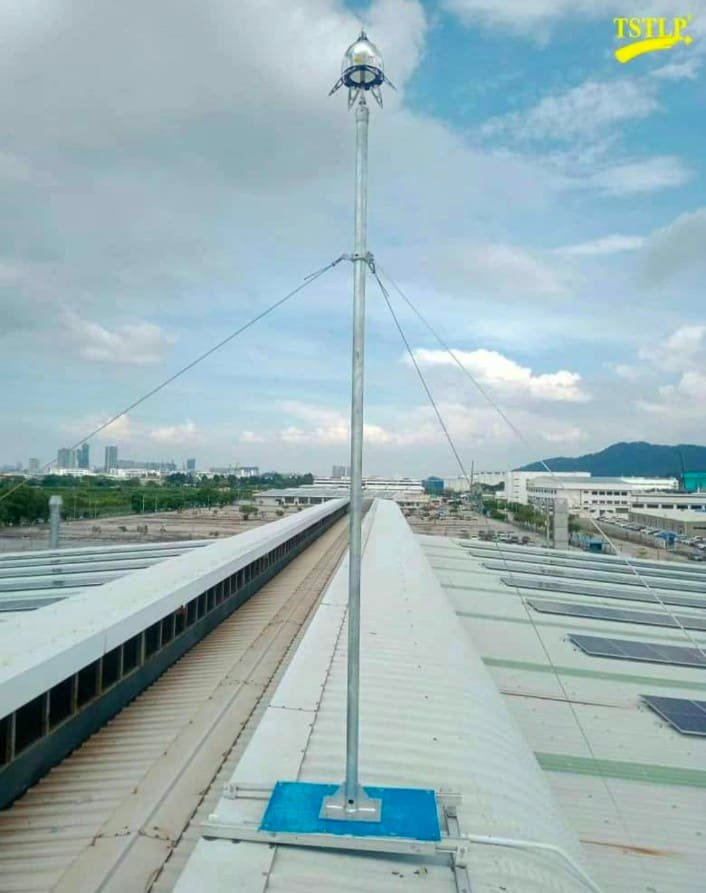
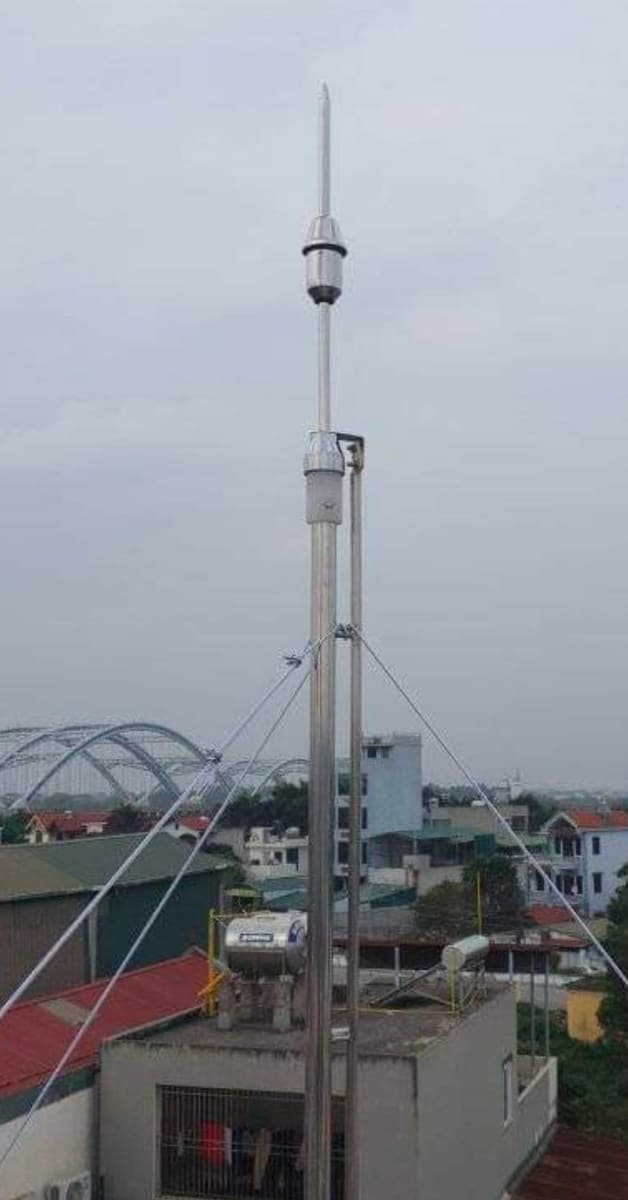
ESE Air Terminal
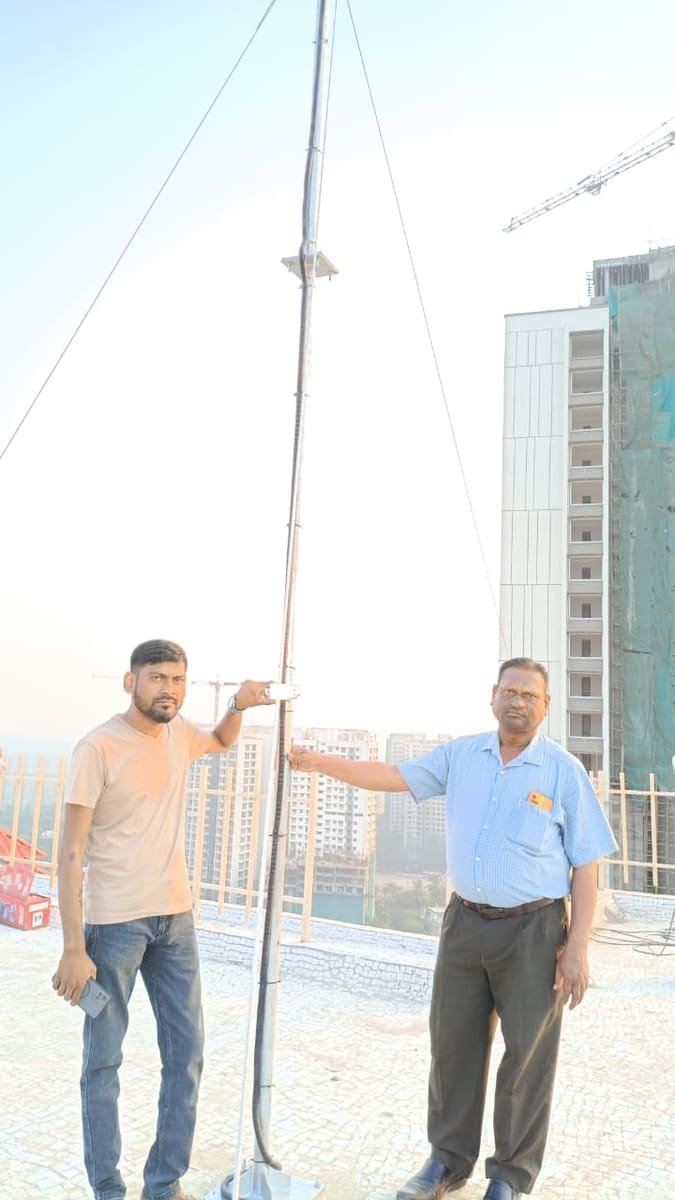
Early Streamer Emission head with mast, couplers and mounting base.

Copper Air Terminals
Solid copper and multi-point terminals for conventional systems.
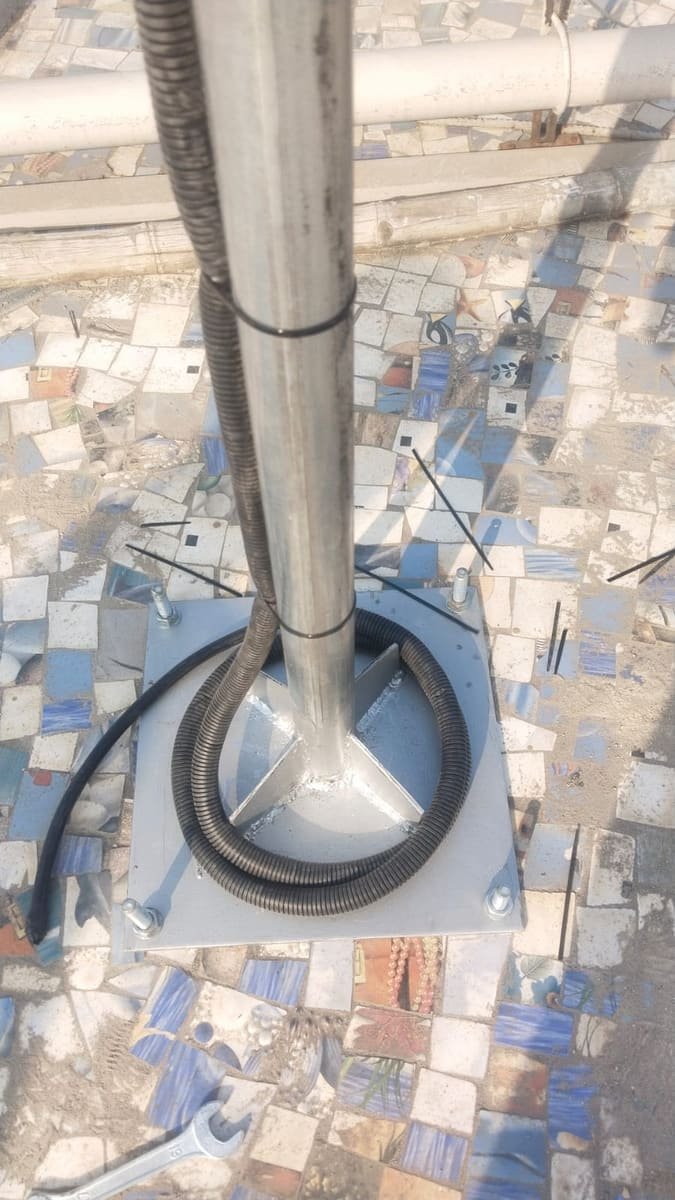
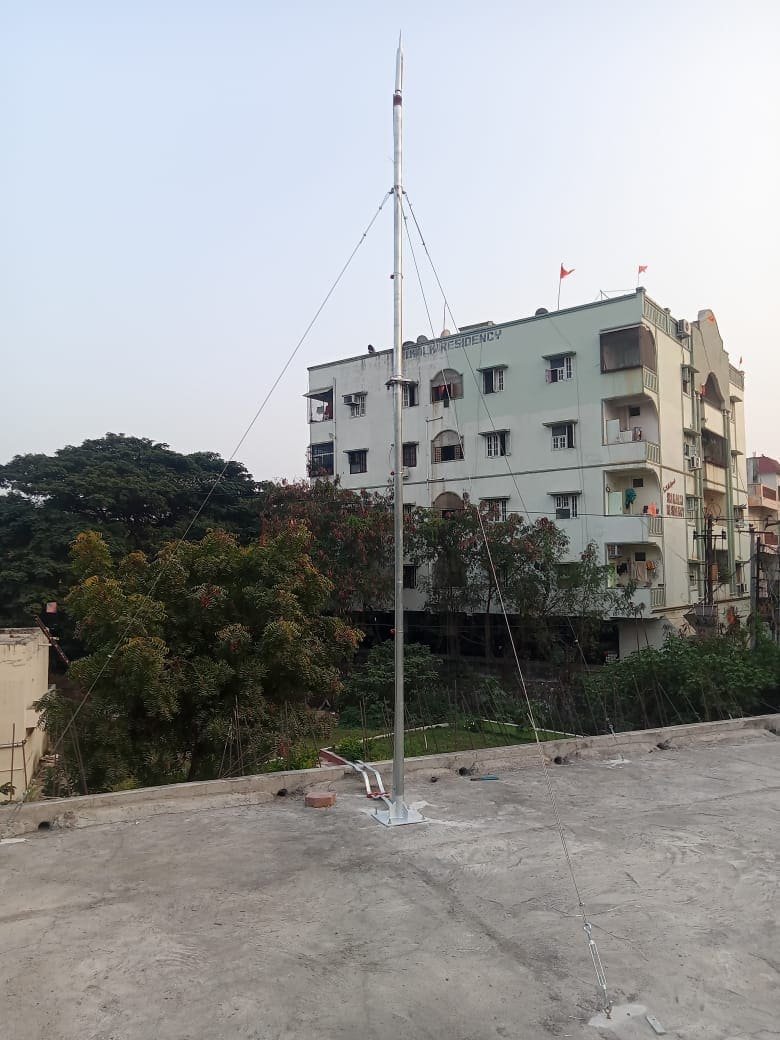
Mast Base & Guying
Galvanised masts, base plates and guy wires for wind stability.
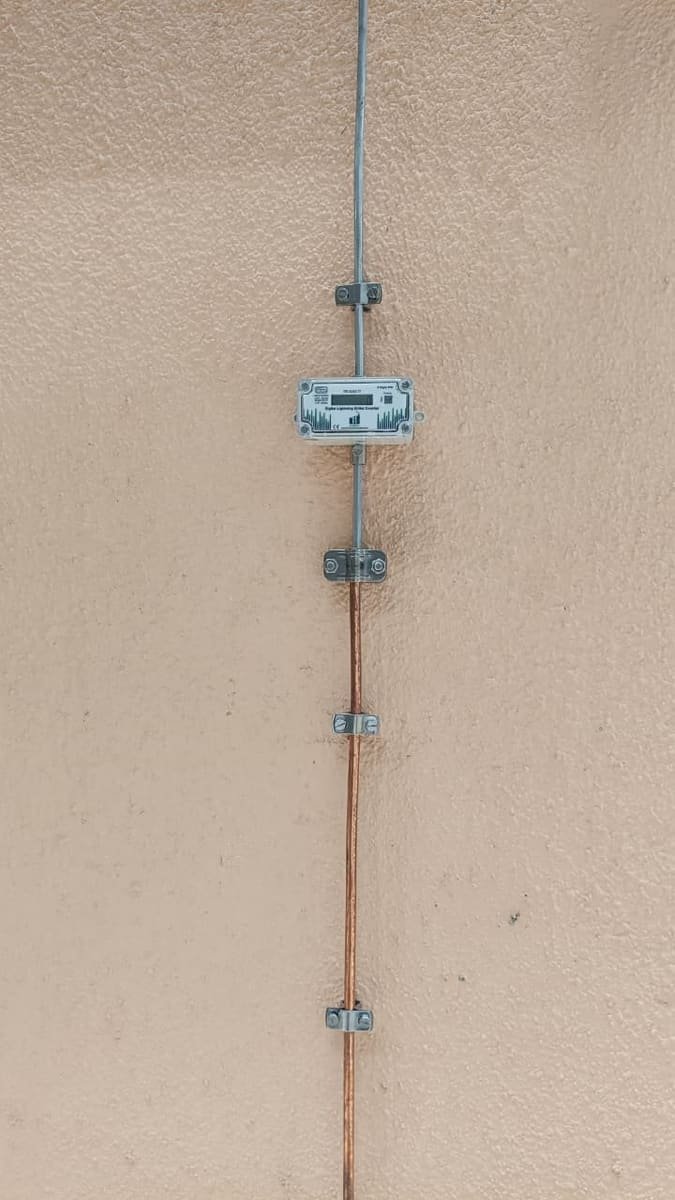
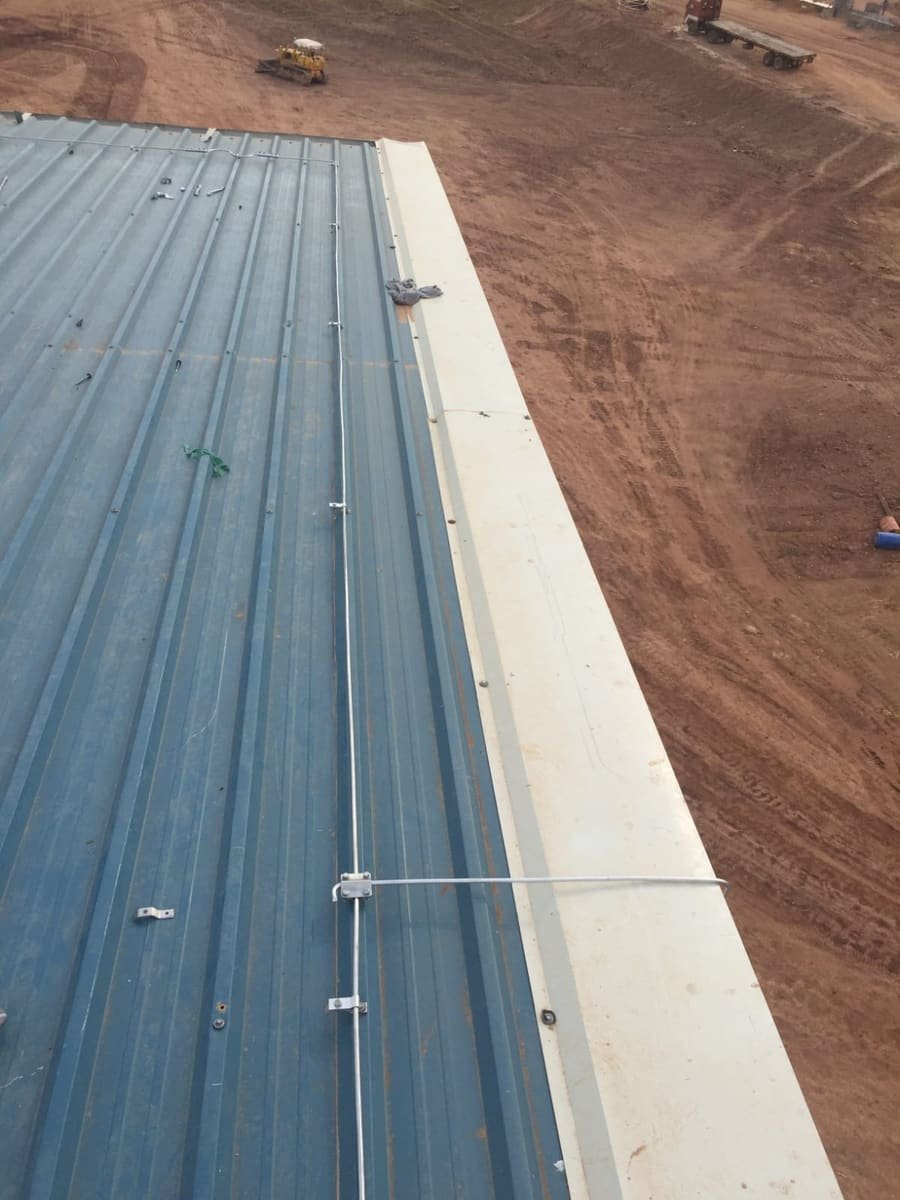
Down Conductors
GI or copper tape/round conductors with spacer holders.
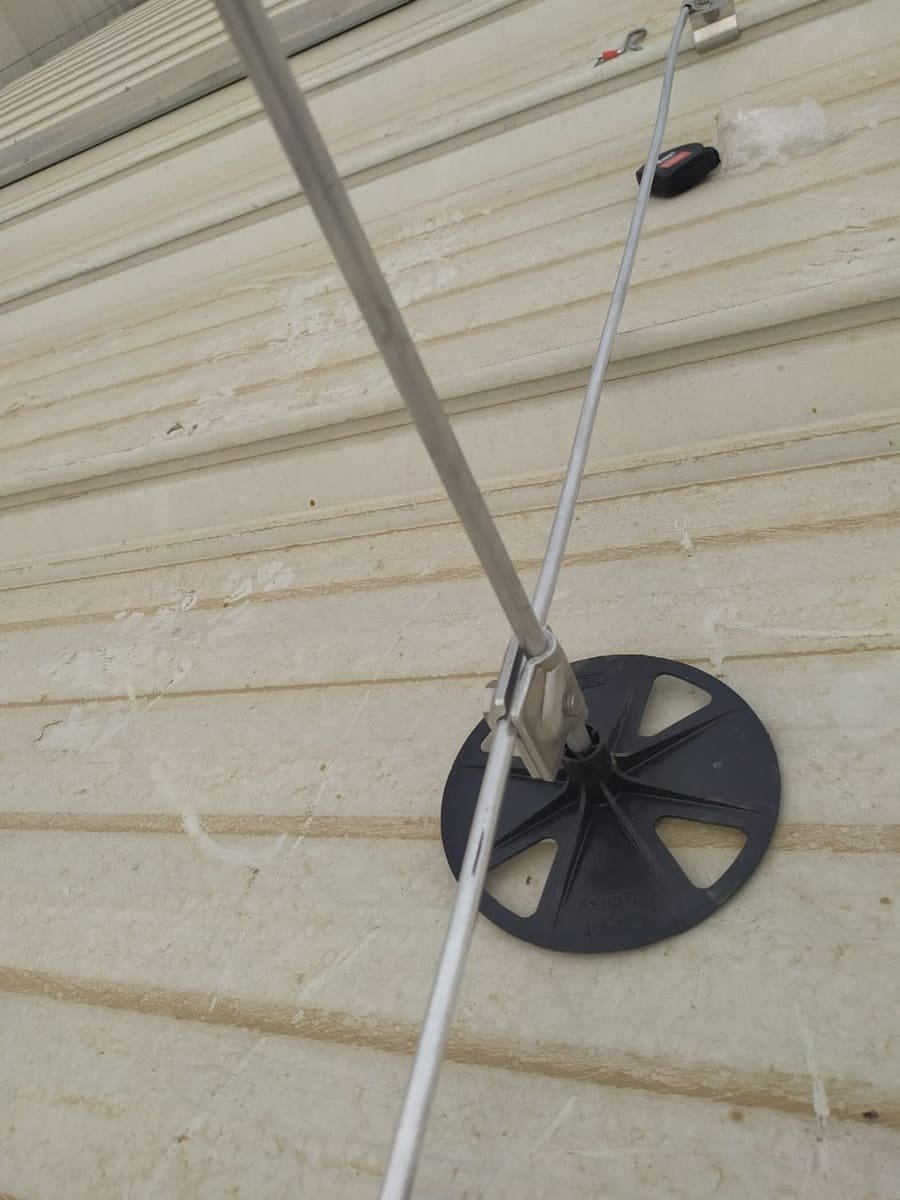
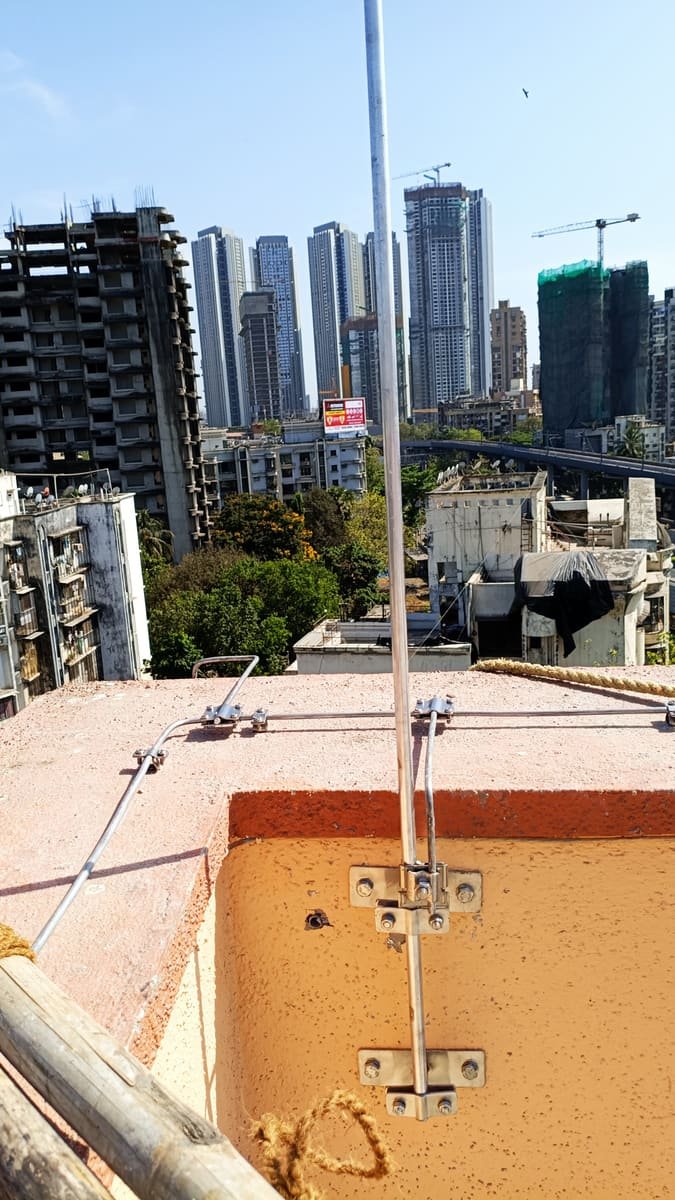
Roof Conductor Holders
Concrete-block and clip holders for flat and sloped roofs.
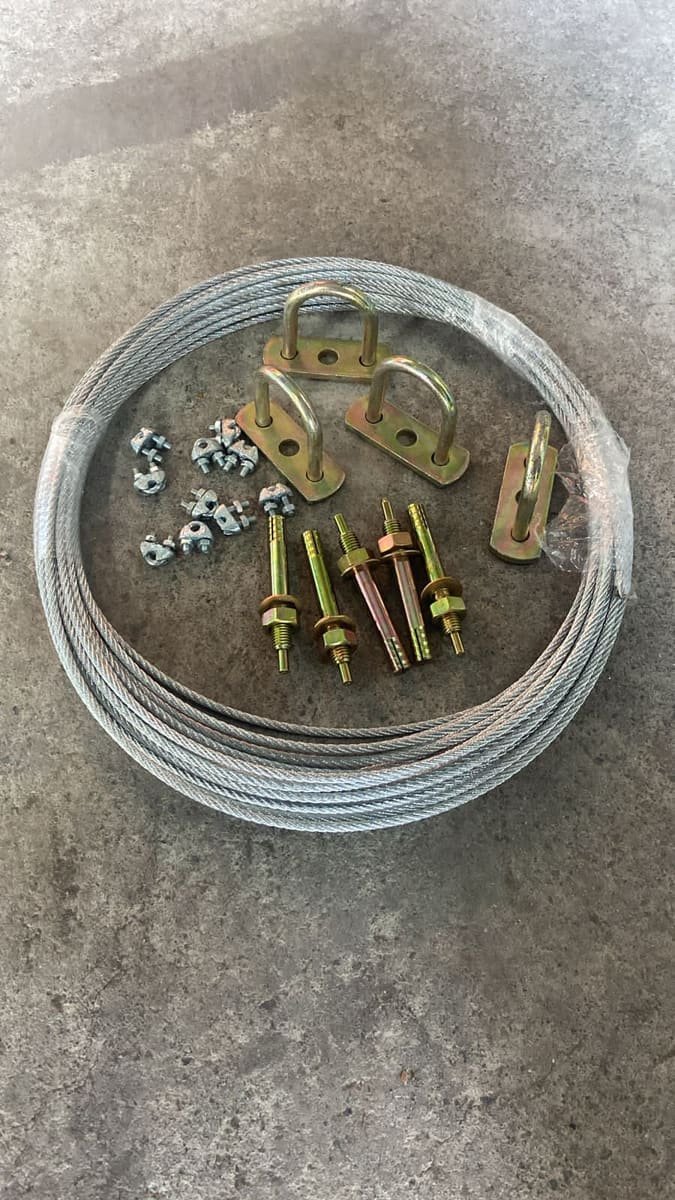
Fixings & Hardware
Clamps, anchors and fasteners that withstand weather and corrosion.
Choosing the Right System
| Building type | Recommended system | Why |
|---|---|---|
| Industrial sheds & warehouses | ESE arrester + roof conductors | Large roof area covered with fewer masts |
| Solar power plants | ESE masts + array earthing | Wide open area; protects modules & inverters |
| High-rise apartments | ESE or Franklin + façade down conductors | Tall structures attract more strikes |
| Railway & Metro stations | As per project specification | Public safety & signalling equipment |
| Independent homes & villas | Compact ESE or Franklin rod | Cost-effective protection for families |
Engineered for Your Site
Risk assessment
Structure dimensions, location, occupancy and lightning density are evaluated to select the protection level.
Coverage design
Protection radius and mast height calculated so every part of the structure is covered.
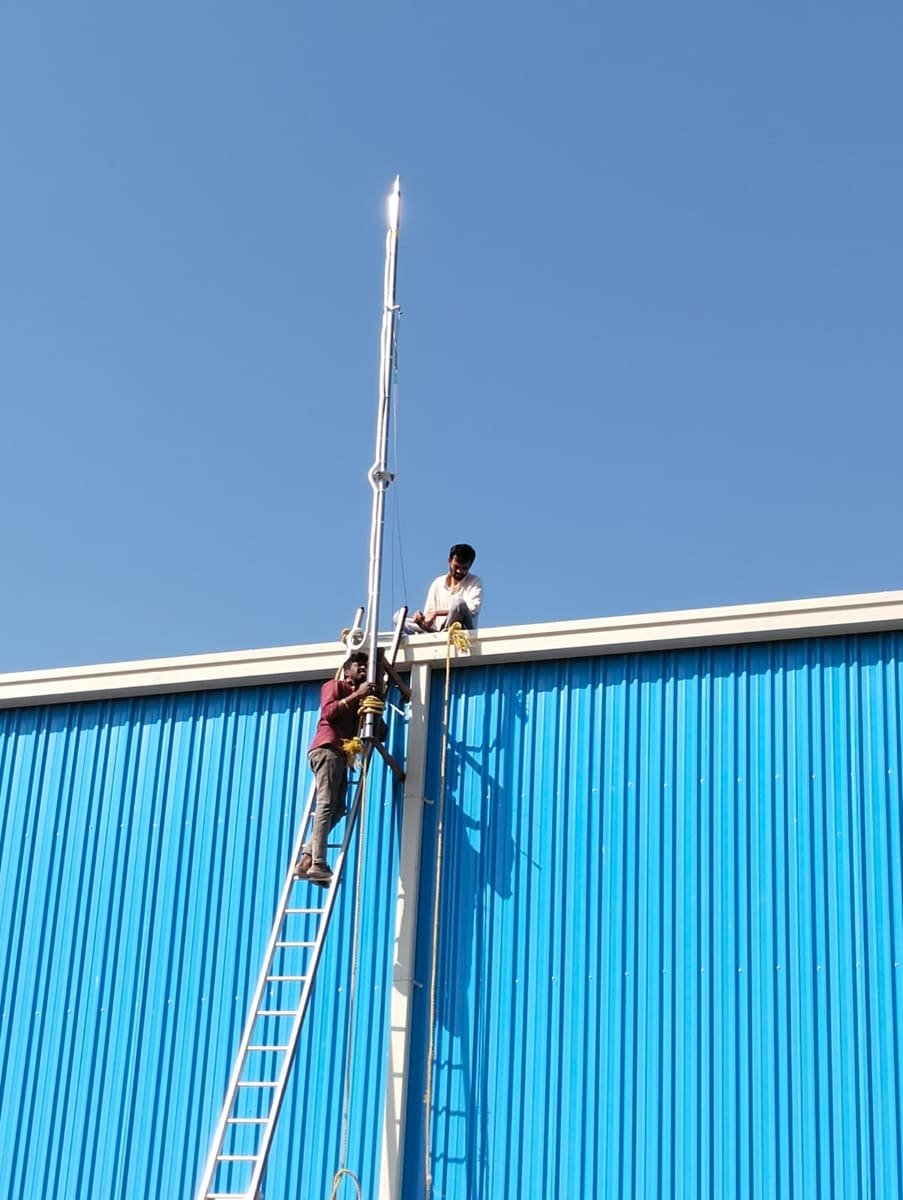
Safe installation
Experienced crews working at height with proper safety equipment.
Testing & certification
Continuity and earth resistance tests with a documented handover report.
Frequently Asked Questions
Clear answers to the questions our clients ask most often.
How does an ESE lightning arrester work?
What is the protection radius of an ESE arrester?
Is a lightning arrester enough on its own?
How often should a lightning protection system be inspected?
Get a lightning protection design for your building
Share your building details and we will provide a free site survey, protection-radius calculation and quotation.